On an old PSA group car, an electrical failure does not always stem from the battery or the starter. The BPGA (Protection and Management of Power Supplies Unit) concentrates the distribution of current to the various circuits of the vehicle. When it malfunctions, the symptoms are all similar: silent warning lights, unresponsive accessories, impossible starting. Understanding its role and knowing how to test it prevents random part replacements.
BPGA Fuses and Loss of Contact: The Trap of Vehicles Exposed to Humidity
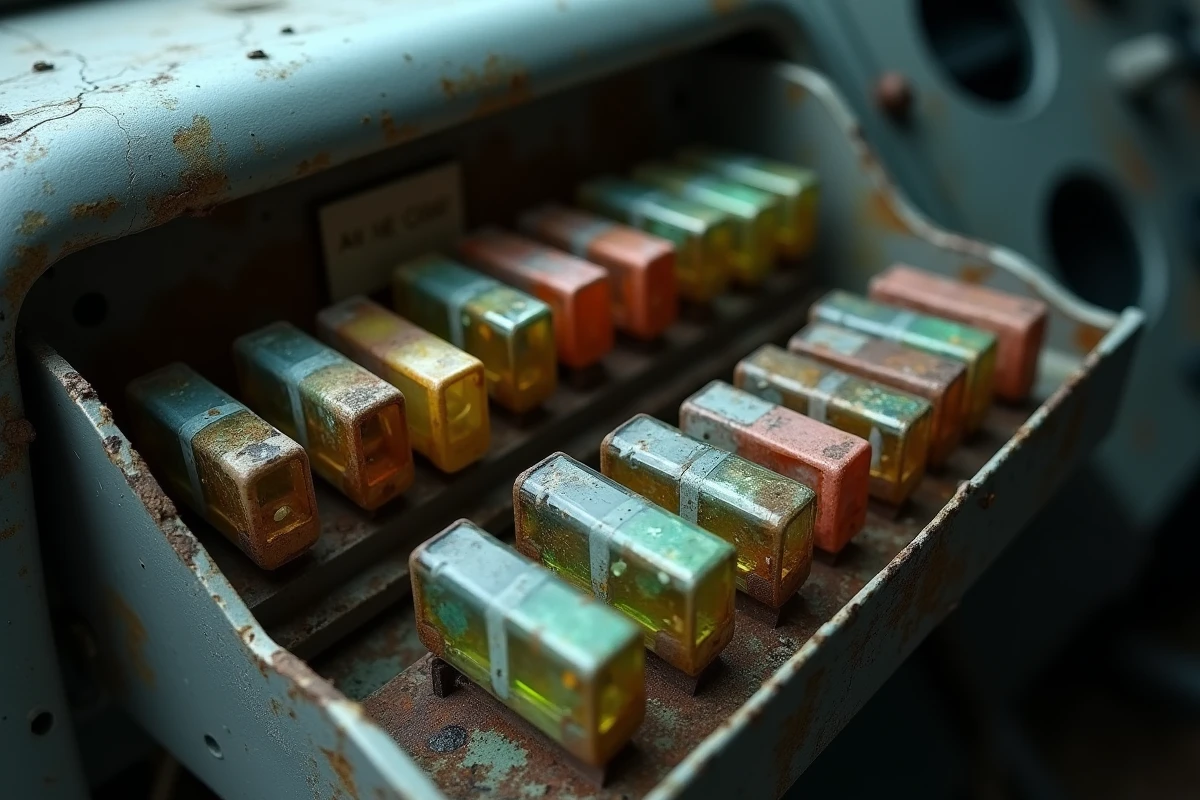
Before even discussing a global diagnosis, a technical point deserves full attention on old cars equipped with this unit. The fuses mounted at the head of the line in the BPGA may appear visually intact, with an unbroken filament, yet may no longer ensure the passage of current.
The most common cause on older vehicles is a loss of contact at the fuse blades. Humidity, heat cycles under the hood, and slow corrosion of the connections eventually create an invisible resistance to the naked eye. A fuse with a seemingly good filament can cut off the power to an entire circuit without leaving any visual trace.
This is why a simple visual inspection of the fuses is never sufficient on an old BPGA. A multimeter is needed, set to continuity mode or voltmeter mode, to test each fuse in place.
If you remove the fuse to check it in isolation, you risk missing a contact fault between the blade and the holder, which is precisely the most common problem. A detailed guide allows you to test a BPGA unit on Les Voitures Anciennes by following the diagram of each fuse location.
BPGA Diagnosis by Symptoms: Reasoning in a Decision Tree
You turned the key and nothing happens. The natural reflex is to blame the battery or the starter. But on a Peugeot, Citroën, or DS vehicle equipped with a BPGA, the power failure may come from the unit itself, and the only symptom “does not start” is not enough to confirm this.
The right method relies on a cross-checking of several clues before incriminating the BPGA. Ask yourself three questions in this order:
- Do the dashboard lights come on when you turn the key? If no lights appear, the problem is likely upstream of the BPGA or on a main power supply cut off by the unit.
- Do any accessories still work (power windows, interior lighting, radio)? If some circuits remain active and others are dead, a specific BPGA fuse or an internal relay is likely to blame.
- Does the starter switch send an impulse? Check the voltage on the starter control wire with a multimeter. If voltage arrives but the starter does not turn, the BPGA is not responsible.
This decision tree approach prevents unnecessary disassembly of the unit. A BPGA is only guilty if multiple circuits powered by it are simultaneously out of service.
BPGA Diagram and Replacement References: Beware of Differences Between Generations
You have identified a problem with the unit. Before ordering a replacement part, a detail often overlooked can turn the repair into a headache.
On the first PSA generations, the internal arrangement of fuse pins and shunt bars does not always correspond to more recent references. Current replacement units benefit from a significantly improved quality of internal soldering, which reduces intermittent cut-off failures. However, their internal layout may differ slightly from the original unit.
Direct consequence: if you use an old diagram found on a forum to locate your fuses, the correspondence of locations may be incorrect on a recent replacement unit. Always check the exact reference written on the unit’s cover and compare it with the manufacturer’s identification diagram, not one from an anonymous contributor who may have described an earlier model.
Battery Voltage and False BPGA Diagnosis
Another common trap on old vehicles: a slightly low battery voltage can cause symptoms identical to a faulty BPGA. Some internal relays in the unit do not switch correctly below a certain voltage threshold. The vehicle seems to have an electrical distribution problem while the battery, simply worn out, no longer provides enough current to activate all circuits.
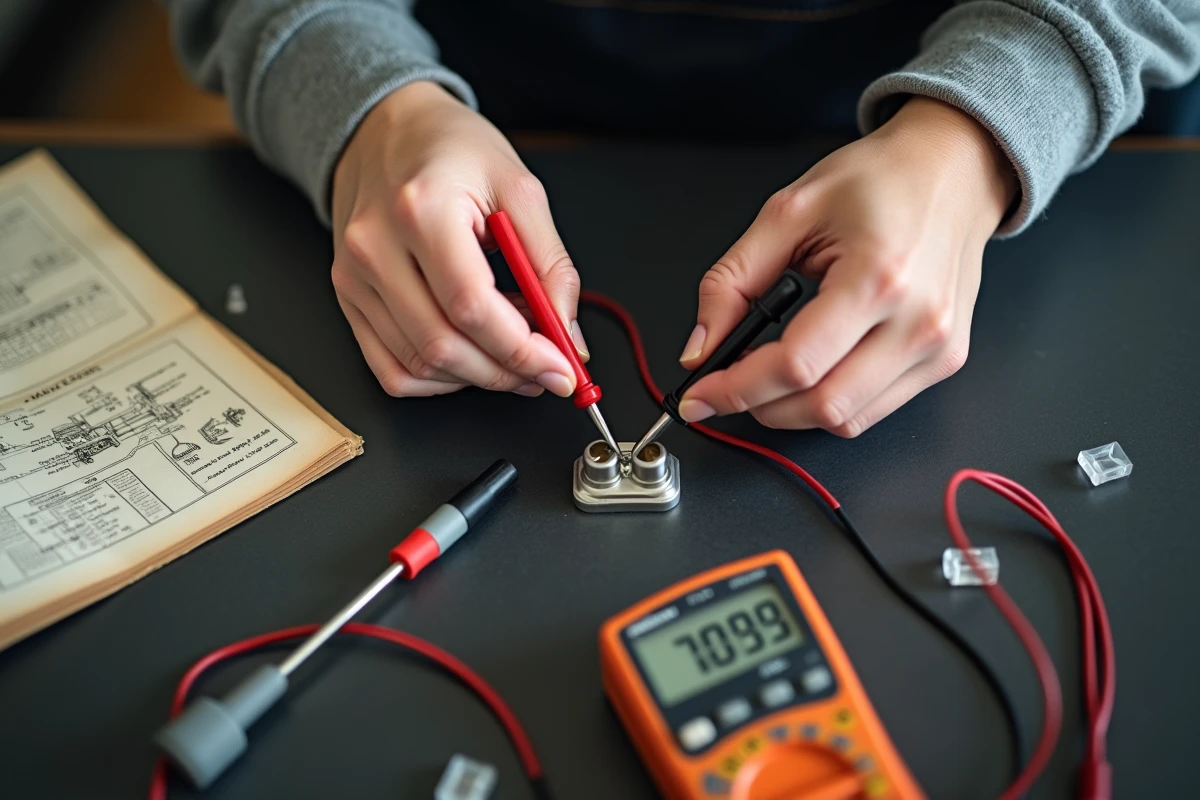
Measure the battery voltage with the engine off before any intervention on the BPGA. If the value drops significantly below the nominal voltage, recharge or replace the battery first. Many BPGA units are disassembled, sent for repair, or replaced while the battery was the only culprit.
Bypassing a BPGA: Why This Practice Remains Risky on an Old Vehicle
When the diagnosis points to the unit and the replacement part is not immediately available, some owners consider bypassing the BPGA, that is, short-circuiting one or more fuses to restore power.
On an old vehicle, this practice is particularly dangerous. The wiring has aged, the insulation of the wires may be weakened, and a bypass removes the fuse protection that prevents a short circuit from spreading. Without this barrier, a bare wire or an oxidized connector can cause rapid overheating, even a fire.
The bypass should never last more than a few minutes, just enough time to move the vehicle. Considering it a temporary solution for several days amounts to driving without electrical protection on circuits that sometimes power the engine control unit, power steering, or ABS.
Replacing or repairing the unit by a professional specialized in automotive electronics remains the only reliable intervention. If the original reference is no longer available, some repairers refurbish the unit by replacing faulty solder joints and internal relays, which extends the lifespan of the BPGA without altering the vehicle’s electrical architecture.