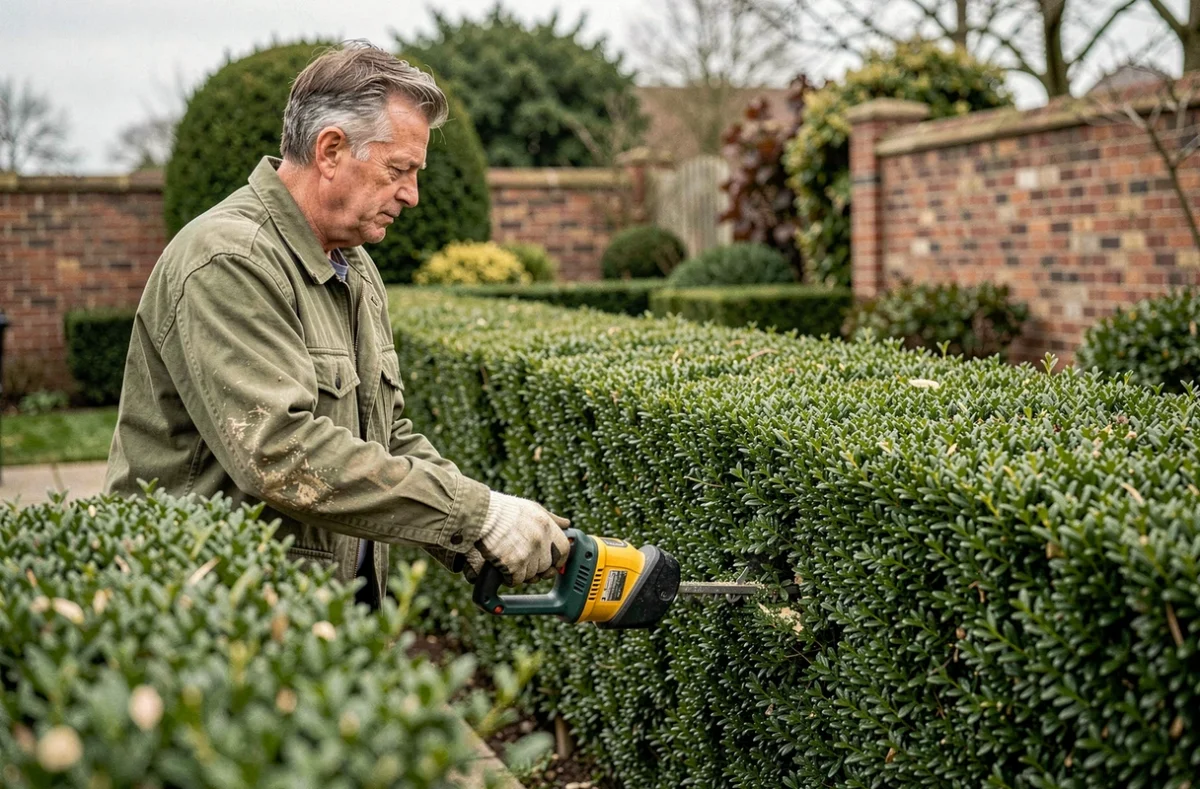
A poorly sized hedge trimmer turns each trimming session into a chore. The choice depends on three technical parameters that we will detail: the blade, the type of motorization, and the regulatory constraints related to noise, which are often underestimated.
Spacing of teeth and blade length: the two dimensions that dictate everything
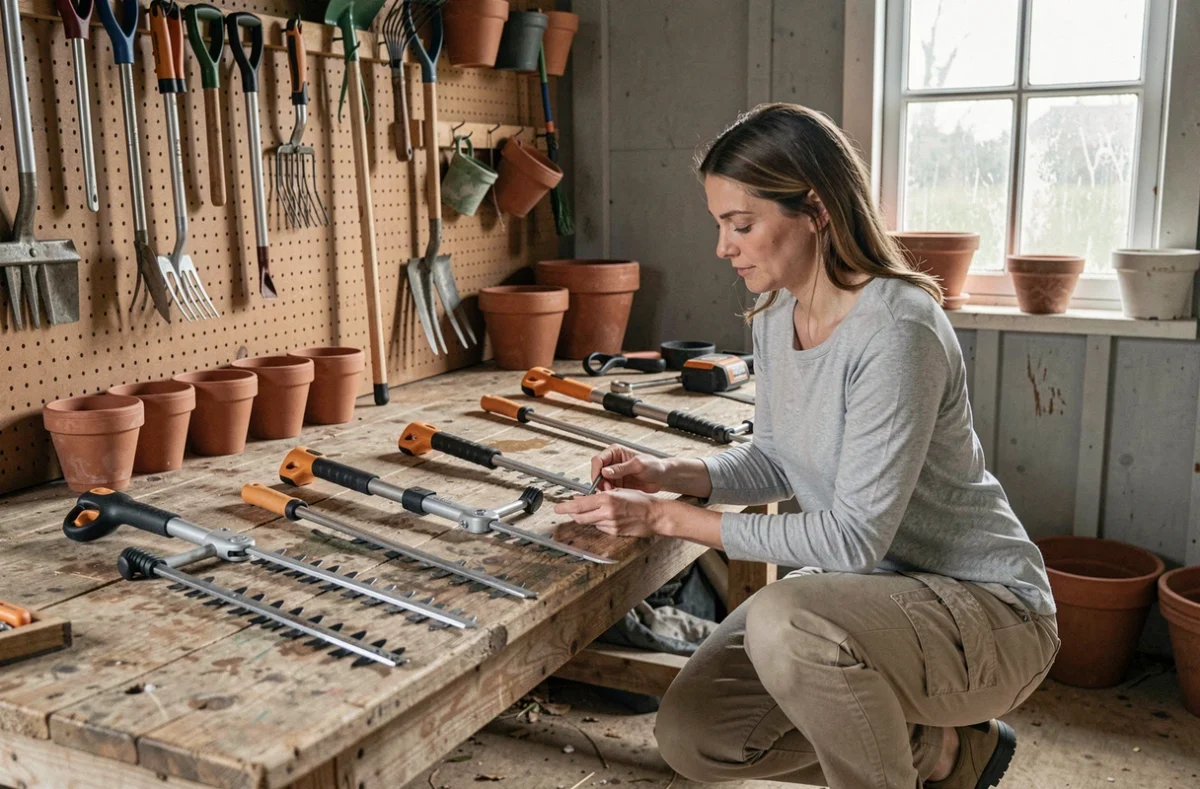
The blade is the main component. Its length determines the cutting width in a single pass, while the spacing between the teeth sets the maximum diameter of branches accepted. Insufficient spacing against woody branches causes jams, premature wear of the blades, and an uneven cut that weakens the hedge.
For regularly trimmed boxwood or privet, a tooth spacing of less than two centimeters is sufficient. For cherry laurel or thuja left unmaintained for several months, a wider spacing is needed, capable of handling semi-woody branches without straining the motor.
The length of the blade should be chosen based on the depth of the hedge, not its height. A narrow hedge (less than one meter deep) can be comfortably worked with a short blade, which is more maneuverable and less tiring. Long blades are only justified on thick country hedges, where each pass must cover a maximum area. We recommend consulting the technical sheets on taille-haie-warrior.com to precisely compare blade dimensions according to the models.
Battery, corded, or gas: deciding based on noise constraints
Noise conditions the choice more than raw power. In France, the authorized time slots for gardening work are set by municipal or prefectural decree. A gas model, even used during an authorized time slot, can still be penalized if the noise level is deemed excessive by the neighbors.
This regulatory reality weighs heavily for gardens in dense residential areas. Before choosing a gas hedge trimmer for its power, check your municipality’s decree. The time slots are sometimes limited to Saturday mornings, which drastically reduces the available working time.
Battery: the dominant technical compromise
High-voltage battery platforms now offer sufficient motor torque for semi-woody branches, with a noise level significantly lower than gas. Battery life remains the weak point: on a long fence hedge, a single charge does not always cover the entire length.
The solution is to invest in a second battery or choose a platform compatible with other tools from the same manufacturer. The interchangeability of batteries between tools reduces the overall cost of the equipment over several seasons.
Gas: reserved for significant lengths
The gas engine has a clear advantage on very long rural hedges, where unlimited autonomy and constant power prevent interruptions. However, mechanical maintenance (spark plug, air filter, oil-gas mixture) increases the cost of use. We observe that many individuals underestimate this maintenance and end up with a device that starts poorly by the second season.
Corded: a specific use case
The corded electric hedge trimmer remains relevant in only one scenario: a short hedge, located immediately next to an outdoor outlet. Its power-to-price ratio is the best on the market, but the extension cord limits movement and requires constant vigilance to avoid cutting the cable.
Trimming period and legal framework: narrower windows than one might think
The French Office for Biodiversity recommends avoiding any trimming between March 15 and July 31, the nesting period for birds. This recommendation is not yet a general prohibition, but the agricultural orientation law of March 24, 2025, provides for departmental management of sensitive periods, with decrees adapted to local species. The entry into force of certain prohibitions is announced starting in 2027.
In practice, the trimming windows focus on two time slots:
- The end of winter (February to early March), before the start of nesting, for formation or restructuring trimming on dense hedges
- The end of summer (late August to September), after nesting, for maintenance trimming that restores a neat appearance before winter
- A possible light trimming in autumn (October to November) on fast-growing species like cherry laurel or Leyland cypress
This calendar constraint directly influences the choice of hedge trimmer. If you only have two short windows per year, the hedge accumulates more volume between each pass. The hedge trimmer must then handle thicker branches than in monthly trimming, which leads to a wider tooth spacing and a more powerful motor.
Weight and balance of the hedge trimmer: the factor that is often underestimated
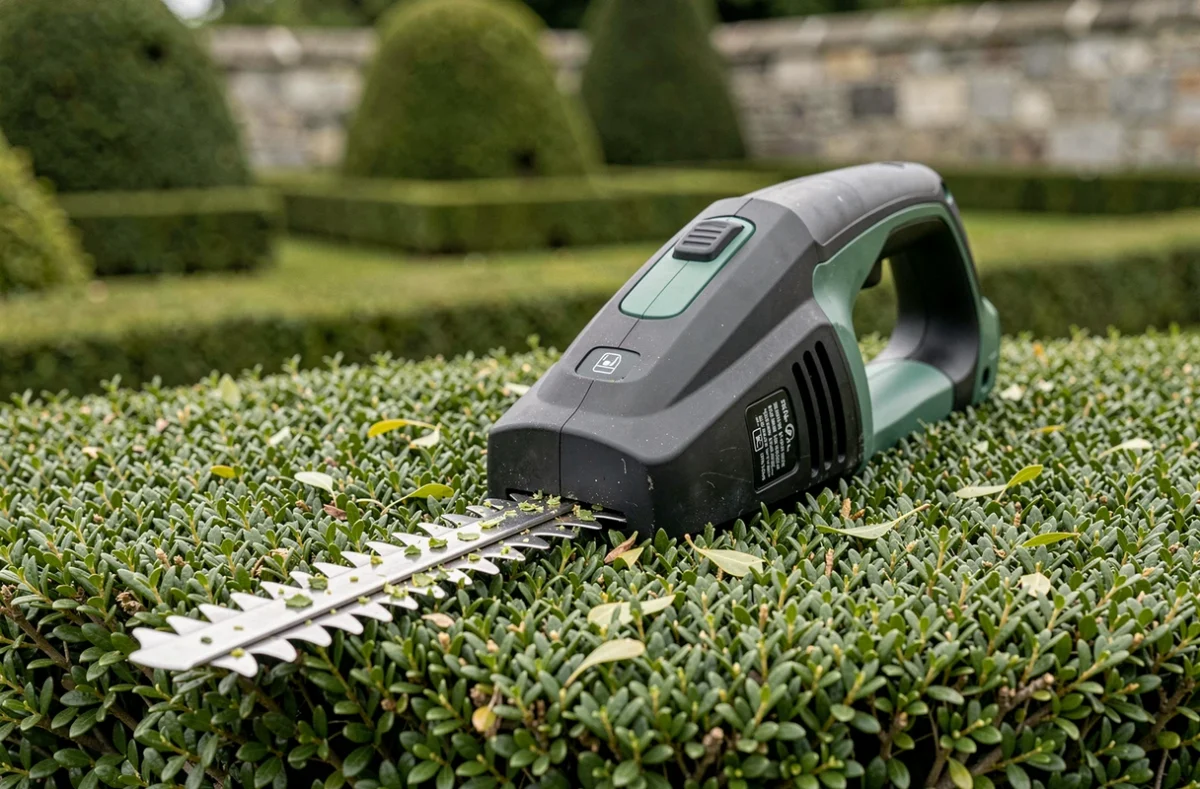
A hedge trimmer is held at arm’s length, often above shoulder level for top cuts. Beyond a certain weight, muscle fatigue degrades cutting precision after a few minutes. It is not the total weight that matters most, but the distribution of mass between the motor and the blade.
A well-balanced device is maneuvered with less effort than a lighter but front-heavy model. Test the balance point by holding the device by the main handle: if the blade dips sharply toward the ground, long sessions will be exhausting.
- Rotating rear handle: allows switching from side cutting to vertical cutting without repositioning the hands, reducing micro-breaks and fatigue
- Anti-vibration system: on gas models, it reduces vibrations transmitted to the forearms and limits the risk of musculoskeletal disorders
- Blade tip protection: protects the blades when working along a wall or fence, a detail that avoids premature sharpening costs
The choice of a hedge trimmer boils down to a technical triptych: blade suitable for the diameter of branches, motorization compatible with your noise and calendar constraints, and ergonomics that allow work sessions without excessive fatigue. It is better to invest in a model slightly above your current needs, as a hedge left untrimmed for several months produces wood that entry-level models cannot handle.