Creating a harmonious and functional garden path is not a task to be taken lightly. It all starts with careful planning, where the choice of layout plays a fundamental role. A winding path invites strolls and discovery, while a straight layout offers a sense of order and structure.
Once the layout is defined, the appropriate materials must be selected. Natural stone pavers add a rustic touch, while concrete slabs provide a more modern finish. The final step is to prepare the ground and carefully lay the chosen materials, ensuring the path’s durability and aesthetics.
Preparing the Ground and Defining the Layout
Outdoor landscaping involves utilizing all available space, whether it’s a garden, terrace, or balcony. To structure this space and promote smooth circulation, creating a garden plan is necessary. This plan can include various elements: the site plan, based on the land registry, and scaled plans. Some planting plans may even incorporate 3D or 2D representations, making visualization easier.
Preparation Steps
Before defining the layout, follow these steps:
- Soil Analysis: Identify areas where the soil is stable and those requiring intervention.
- Defining the Layout: Use stakes and strings to mark the contours of the path.
- Excavation: Dig the ground to a depth of 10 to 15 cm to prepare a solid base.
Compacting Gravel and Laying Materials
Once the layout is defined and the ground prepared, proceed to the installation. The first layer to install is often a layer of gravel, which must be compacted to ensure a stable base. Lay the chosen materials, whether they are pavers, slabs, or wood. Each material brings a particular aesthetic and should be chosen based on the overall garden design.
Professional Intervention
For optimal results, the intervention of landscapers may be necessary. They will be able to adapt the layout and materials according to the specifics of the terrain and aesthetic expectations. A successful outdoor layout should not only structure the space but also make it pleasant and functional.
Choosing Materials and Laying Them
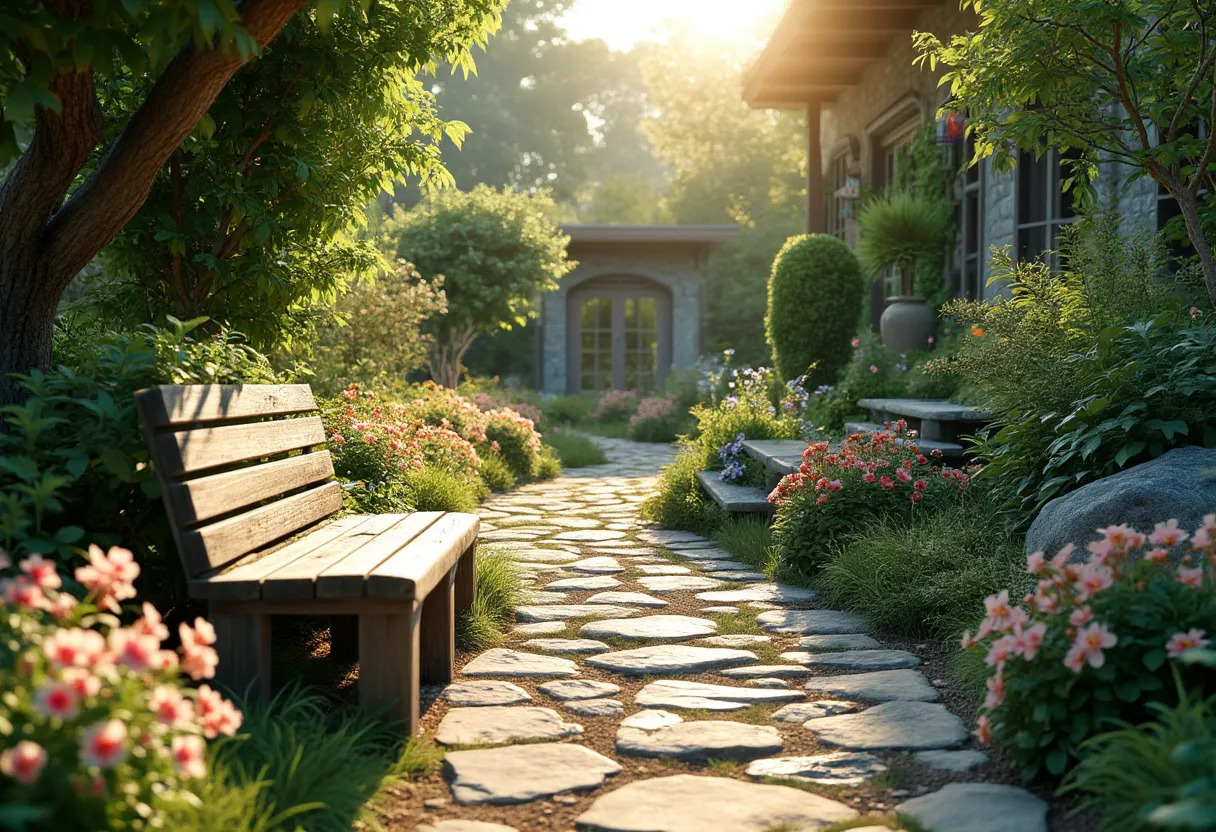
In any outdoor landscaping project, the choice of materials is fundamental to ensure the durability and aesthetics of the garden path. Each material has specific characteristics, whether it is concrete pavers, natural stone slabs, or wood. The most commonly used materials are:
- Concrete Pavers: Economical and easy to install, they offer a wide variety of shapes and colors.
- Natural Stone Slabs: Elegant and robust, they integrate harmoniously into a garden.
- Wood: Warm and natural, it requires regular maintenance but adds an authentic touch.
Laying the Materials
The installation of materials should follow specific steps to ensure an optimal result. Here are the main steps to follow:
- Soil Preparation: After excavation and laying the gravel layer, install a geotextile to prevent weed regrowth.
- Laying the Materials: Start with the borders to define the path, then lay the pavers or slabs, ensuring proper spacing.
- Compaction and Filling Joints: Use a compactor to stabilize the materials and fill the joints with sand or gravel for better fixation.
Finishing Touches and Maintenance
Finishing touches are essential for a successful garden path. Consider adding decorative elements like plant borders or solar lights. Regular maintenance, such as cleaning and checking the joints, will prolong the life of your path.