The spring-summer 2027 shows presented in Paris confirmed a significant shift: the dominant fashion trend no longer relies on a key piece to replicate, but rather on how to compose and personalize a silhouette. Comparing the directions taken by the houses during the last Fashion Week allows us to measure what truly distinguishes a unique style this season.
Styling versus signature piece: what the spring-summer 2027 Fashion Week has changed
During the Parisian shows, several houses reinterpreted their historical codes with less formal layering, lighter materials, and combinations borrowed from lingerie or sportswear. The common point: originality comes from styling, not from a single piece.
This approach has direct consequences on the way of buying. Professional buyers observed by WWD in October 2026 are focusing their investments on collections with a strong identity, featuring immediately recognizable products, rather than increasing their purchases indiscriminately. For a personal wardrobe, the reasoning is the same: a few distinctive and versatile pieces replace an accumulation of micro-trends.
This shift favors accessories (belts, scarves, jewelry) as tools for transforming an outfit without renewing the entire wardrobe. This is a direction that can be explored on Concentré De Mode through detailed analyses by category of pieces.
Autumn-winter colors and patterns: overview of dominant directions
The palettes spotted on the Parisian runways fall into two distinct families. The table below contrasts the chromatic directions observed to better guide choices.
| Direction | Palette | Main usage | Customization potential |
|---|---|---|---|
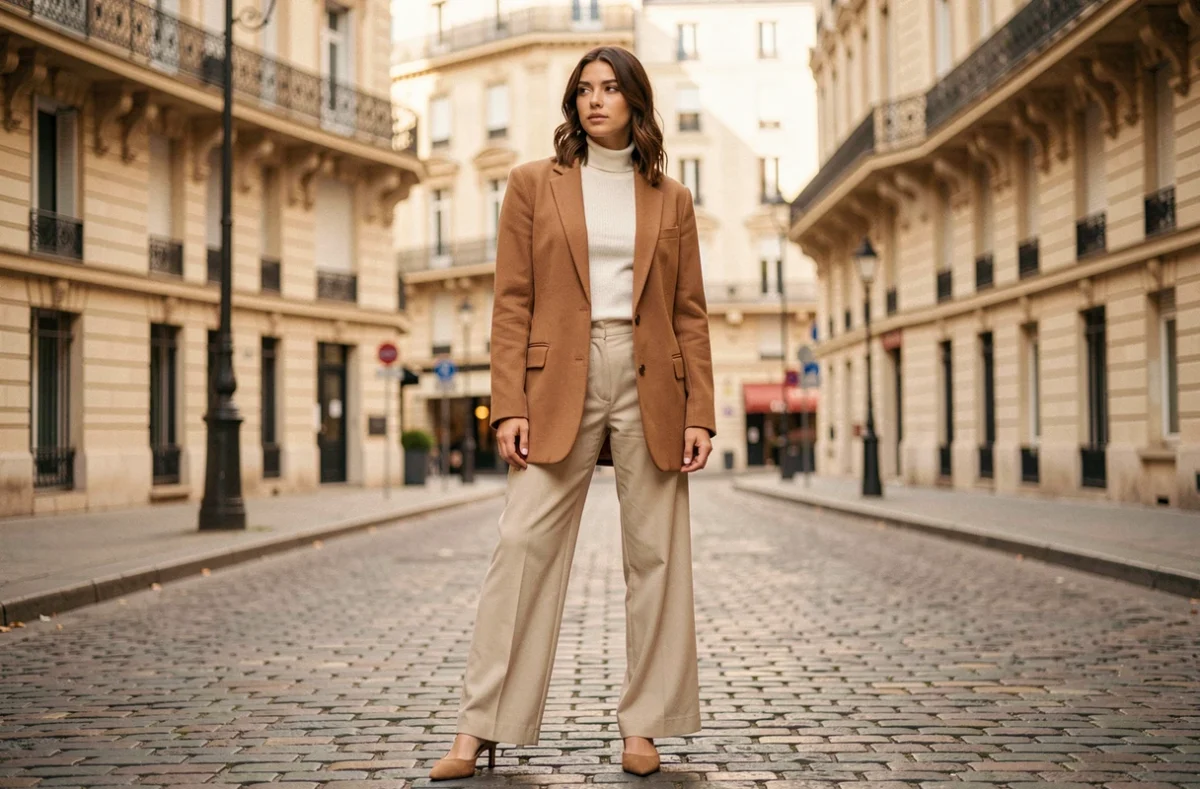
| Reworked neutral tones | Beige, ecru, off-white, light gray | Silhouette bases (pants, trench, oversized sweater) | High: combines with any print or colorful accessory |
| Saturated colors | Butter yellow, electric blue, deep red | Statement pieces (short jacket, skirt, bag) | Moderate: sets the tone for the outfit, limits combinations |
| Prints and patterns | Deconstructed florals, asymmetrical stripes | Blouses, dresses, scarves | Variable: depends on the scale of the pattern and contrast |
Neutral tones offer the most versatile base for a singular style. In contrast, saturated colors work better as a single piece per outfit, set against a sober background.
Selective wardrobe: pieces with high rotation potential this season
Not all trends are equal in terms of longevity and possible combinations. Three categories of pieces stand out for their ability to form different outfits throughout the week.
- The barrel or slightly flared pants, in canvas or denim, which replaces the slim as the neutral base of the silhouette. Its structured shape accommodates both an oversized sweater and a fitted blouse.
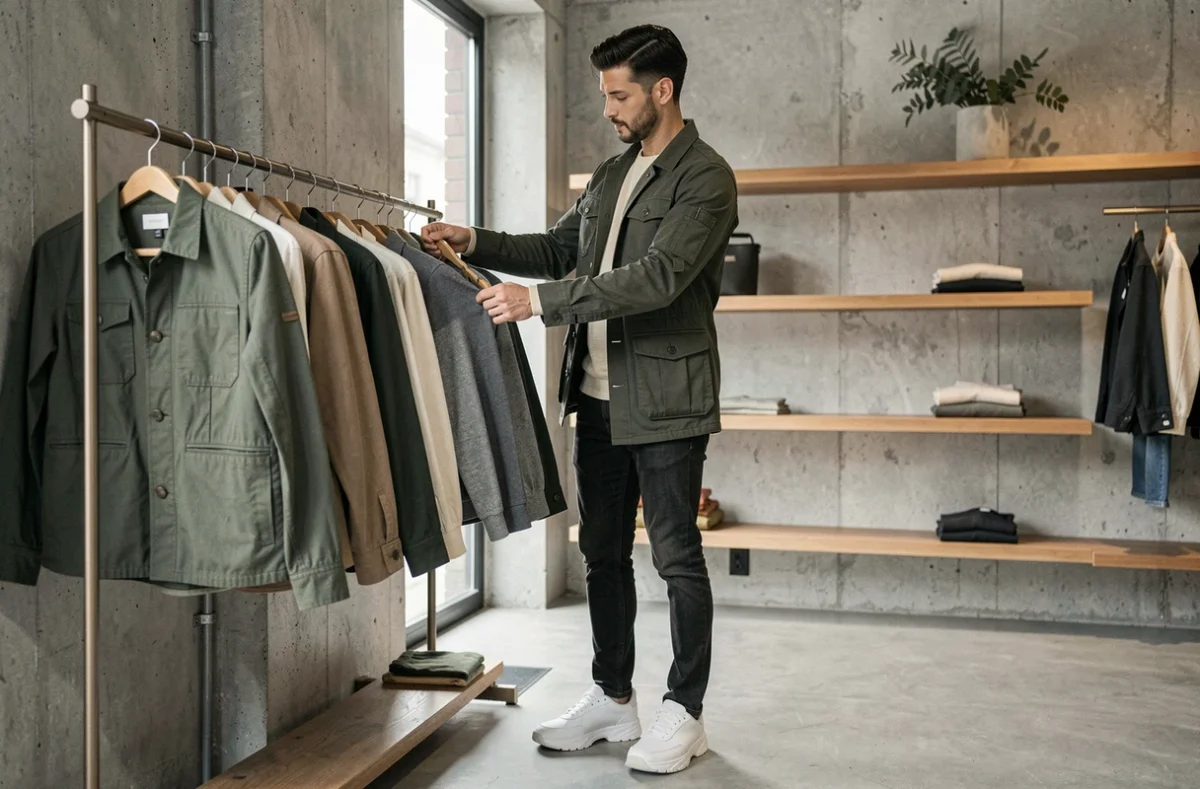
- The short colored jacket (linen, lightweight cotton), worn open over a plain t-shirt or closed as a standalone top. It’s the piece that injects color without committing the entire outfit.
- The scarf or fabric belt, low-cost accessories that alter the visual proportion of an outfit. A scarf tied as a tie or tucked into a jacket pocket changes the reading of an ensemble without adding a garment.
Favoring three to four distinctive pieces rather than ten trends remains the most reliable filter for building a recognizable style.
The trap of seasonal accumulation
Buying every trend spotted on the runways produces the opposite effect of what is sought. A wardrobe overloaded with strong pieces creates visual noise. The most experienced buyers, according to observations reported by WWD, reduce their selections to focus on products with an immediately readable identity.
The same principle applies daily. A unique style is born from voluntary constraint, not abundance.
Visible craftsmanship and textures: the fashion trend that piece lists ignore
The Parisian runways also highlighted clothing constructions where manufacturing becomes an aesthetic element. Visible seams, raw hems, irregular knits: the texture of the garment matters as much as its cut or color.
This direction is based on the idea that embraced imperfection distinguishes a garment worn with intention from a garment simply purchased. A sweater with visible knit stitches, a jacket with contrasting topstitching against the main fabric: these details may not be seen in a catalog photo, but they are noticeable on the street.
To incorporate this trend without revamping the wardrobe, simply check the construction of already owned pieces. A barrel jean with a hand-rolled hem, a trench with the belt tied instead of buckled: these styling gestures extend the logic of the runways without additional purchases.
Women, men, non-binary: the boundaries of wardrobes continue to blur
The spring-summer 2027 collections in Paris have multiplied mixed silhouettes. Layering, loose cuts, and fluid materials blur traditional markers between men’s and women’s wardrobes.
Concretely, this means that wide pants or a work jacket found in the men’s section can structure a women’s outfit, and vice versa. The selection criterion becomes the cut and material, not the category of the section.
This season, the challenge is not to follow a list of fashion trends. The Parisian shows have demonstrated that style is built through subtraction and attention to detail, not accumulation. Choosing less, combining better, and considering texture as much as color: three axes that withstand seasonal changes.