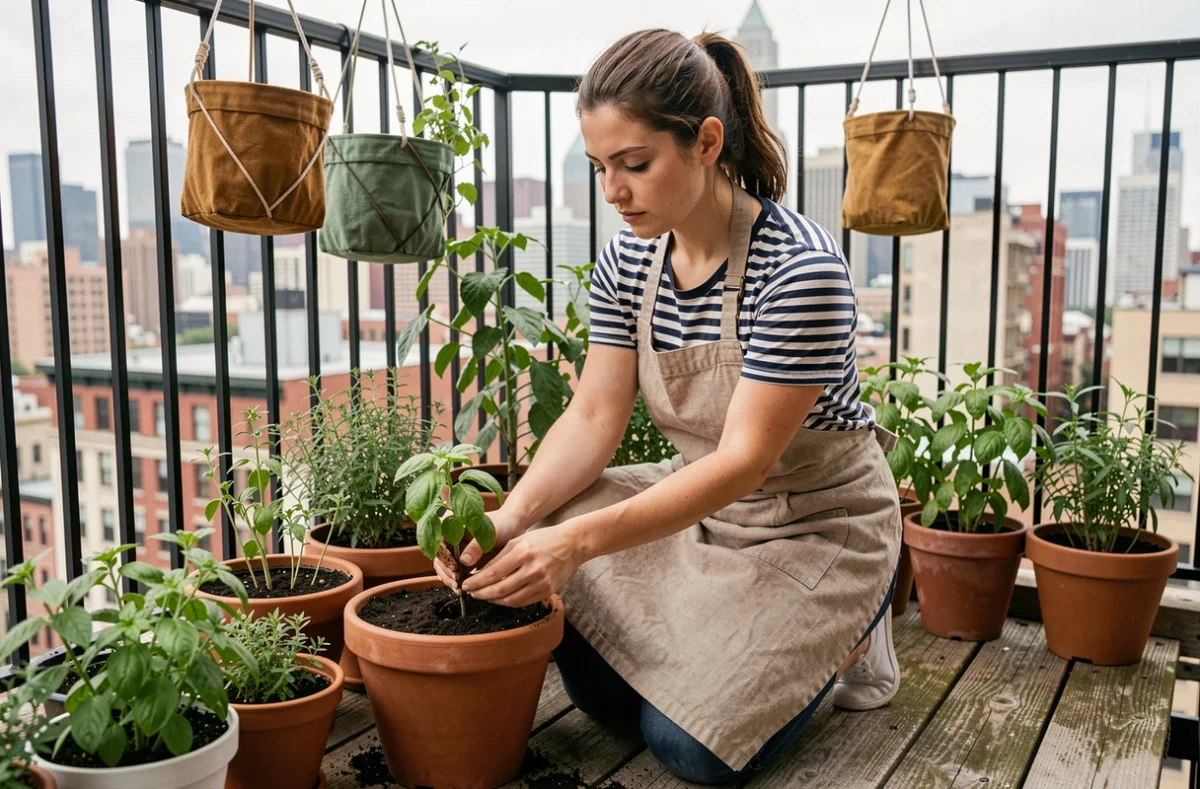
Growing organic vegetables on an urban balcony raises questions rarely addressed in traditional guides: what load can the balcony actually support once the substrate is watered? What restrictions does the condominium impose? What atmospheric contaminants threaten the harvest? Before choosing pots and seeds, these technical parameters determine the feasibility of the organic gardening project in the city.
Permissible load on a balcony: wet substrate and structural limits
The first instinct is to estimate the weight of the planting containers. A common mistake is to calculate based on dry substrate. The load must be assessed once the substrate is wet, adding the container, moist potting soil, drainage, residual water, plants, and any furniture.
A balcony is not designed to handle the same stresses as a terrace on solid ground. The permissible capacity directly depends on the construction (concrete slab, metal structure, cantilever). Before purchasing pots or planters, it is essential to check the condominium regulations or consult the property manager. In some cases, a diagnosis by a building professional is necessary.
Distributing pots along load-bearing walls rather than in the center of the balcony reduces stress on the structure. Several small containers well distributed are better than a single massive container concentrated in one spot. This approach is valid for both an organic vegetable garden on a balcony and a simple floral arrangement.
A comprehensive guide on urban organic gardening with Jardinage Bio details several configurations suitable for small spaces.
Condominium and balcony vegetable garden: what the regulations really allow
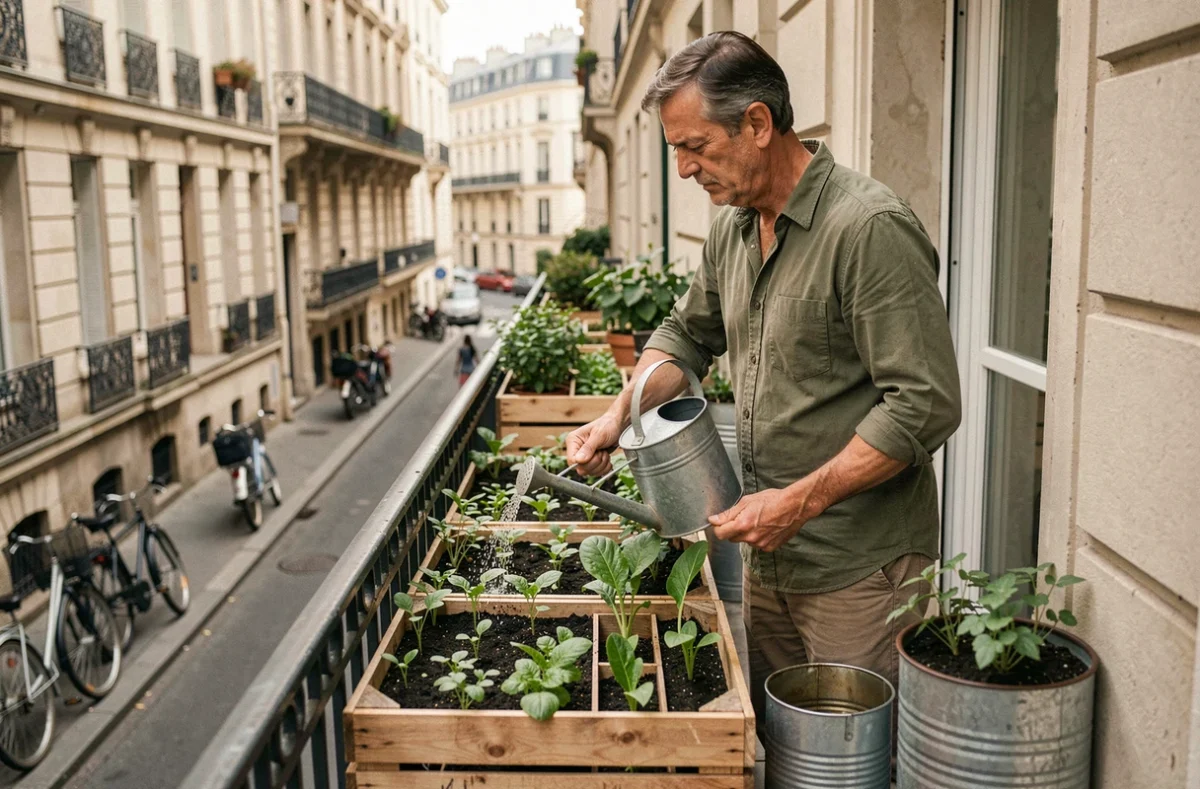
Even when the balcony is for private use, the condominium regulations can significantly limit modifications. The restrictions affect several concrete points that many urban gardeners discover afterward.
- Planters visible from the outside may be subject to facade harmony rules, including their color and size.
- Attachments to the railing (trellises, privacy screens, hanging supports) sometimes require permission at a general assembly, as they alter the exterior appearance of the building.
- Non-drilling solutions preserve waterproofing and avoid disputes with downstairs neighbors. Simply placed containers, self-supporting shelves weighted at the bottom, planters oriented towards the inside of the railing: these options do not compromise the slab or facade.
Drilling a slab or an exterior wall to install a support can cause leaks. The recommendation is clear: read the regulations before any purchase and, in case of doubt, ask the property manager in writing.
Air pollution and soil quality: real risks for a balcony organic vegetable garden
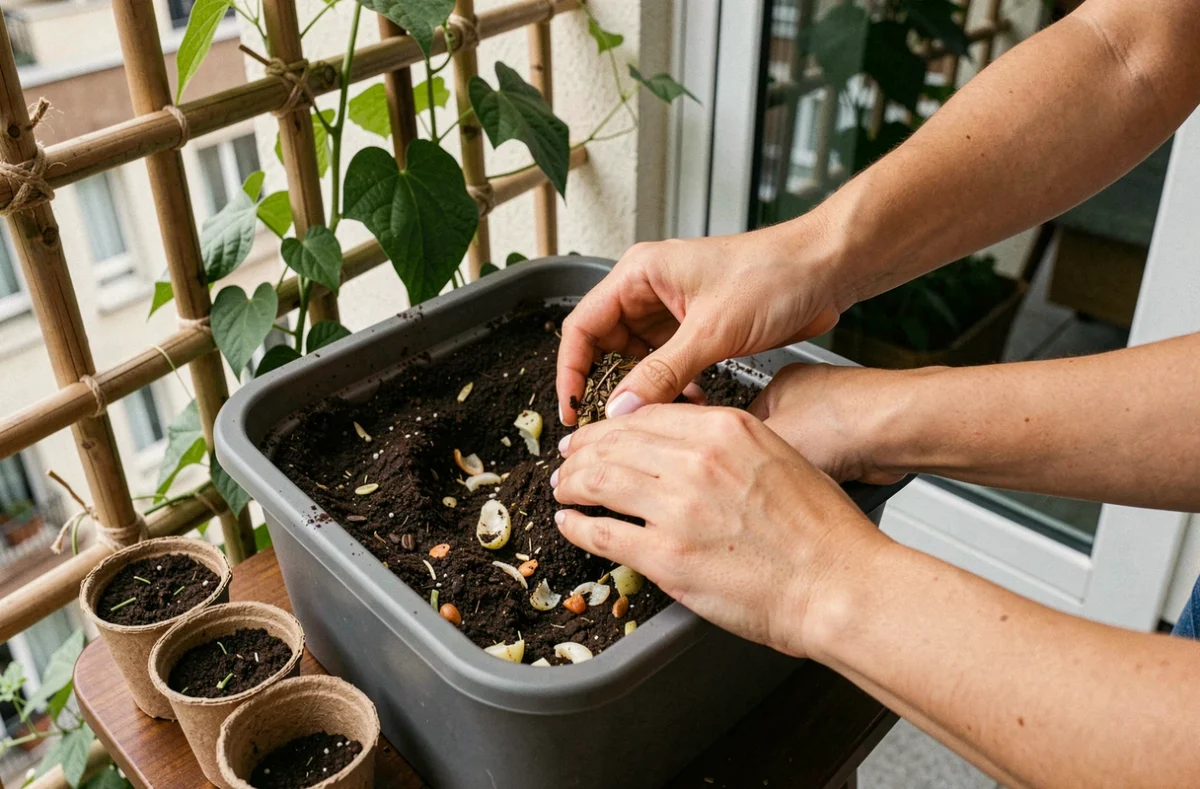
Growing organically requires a substrate free of contaminants. In urban areas, the topsoil collected in the city may contain heavy metals (lead, cadmium) from decades of automotive and industrial pollution. The substrate must come from a controlled source, typically a certified potting soil suitable for organic farming.
Air pollution poses a second problem. Fine particles and exhaust gases settle on the leaves, especially on lower floors facing busy roads. Leafy vegetables (lettuce, spinach) capture more of these deposits than fruiting vegetables (tomatoes, peppers) whose edible parts are protected by skin.
| Type of crop | Exposure to atmospheric pollutants | Recommended adaptation |
|---|---|---|
| Leafy vegetables (lettuce, arugula, spinach) | High (exposed leaf surface) | Thorough rinsing, growing on upper floors or courtyard side |
| Fruiting vegetables (tomato, pepper, strawberry) | Moderate (protective skin) | Standard washing, south orientation if possible |
| Herbs (basil, parsley, chives) | Variable depending on foliage | Favor smooth-leaved varieties, easier to clean |
| Root vegetables in pots (radish, carrot) | Low (edible part in the substrate) | Certified organic substrate, deep container |
Higher floors and balconies facing courtyards significantly reduce exposure to particle fallout. This factor weighs as much as the choice of substrate in the final quality of the harvests.
Watering on a balcony: safety, neighbors, and water management
Watering a balcony vegetable garden concerns more than just the plants. The water that drains from the pots can flow into the neighbor below, generating conflicts and, in the worst case, damage. Waterproof saucers under each container are a minimum requirement. The saucers should be emptied regularly to avoid stagnation, which promotes mosquitoes and root mold.
On the other hand, surface mulching of the substrate (hemp chips, flax flakes) significantly limits evaporation. On a south-facing balcony in summer, an unmulched pot can lose most of its water in a few hours. Mulching reduces the frequency of watering and decreases the volume of water likely to overflow.
For prolonged absences, a drip irrigation system connected to a mechanical timer (without electricity) offers several days of autonomy. These devices connect to a simple balcony faucet and require no drilling.
Choosing organic crops suitable for a small pot space
Not all vegetable plants behave the same way in a limited volume of soil. Compact herbs and fruiting vegetables offer the best yield per square meter of balcony.
- Basil, chives, parsley, and mint take up little space, grow quickly, and can be harvested continuously over several months.
- Cherry tomatoes, determinate varieties (compact growth), produce abundantly in a deep pot oriented south or west.
- Radishes and cut lettuces allow for short cycles and successive sowings every two to three weeks.
- Ever-bearing strawberries fruit from spring to autumn and adapt well to narrow planters or vertical growing towers.
Squashes, cabbages, or corn, which require a large root volume and many nutrients, are not suitable for pot cultivation on a balcony, even with quality substrate.
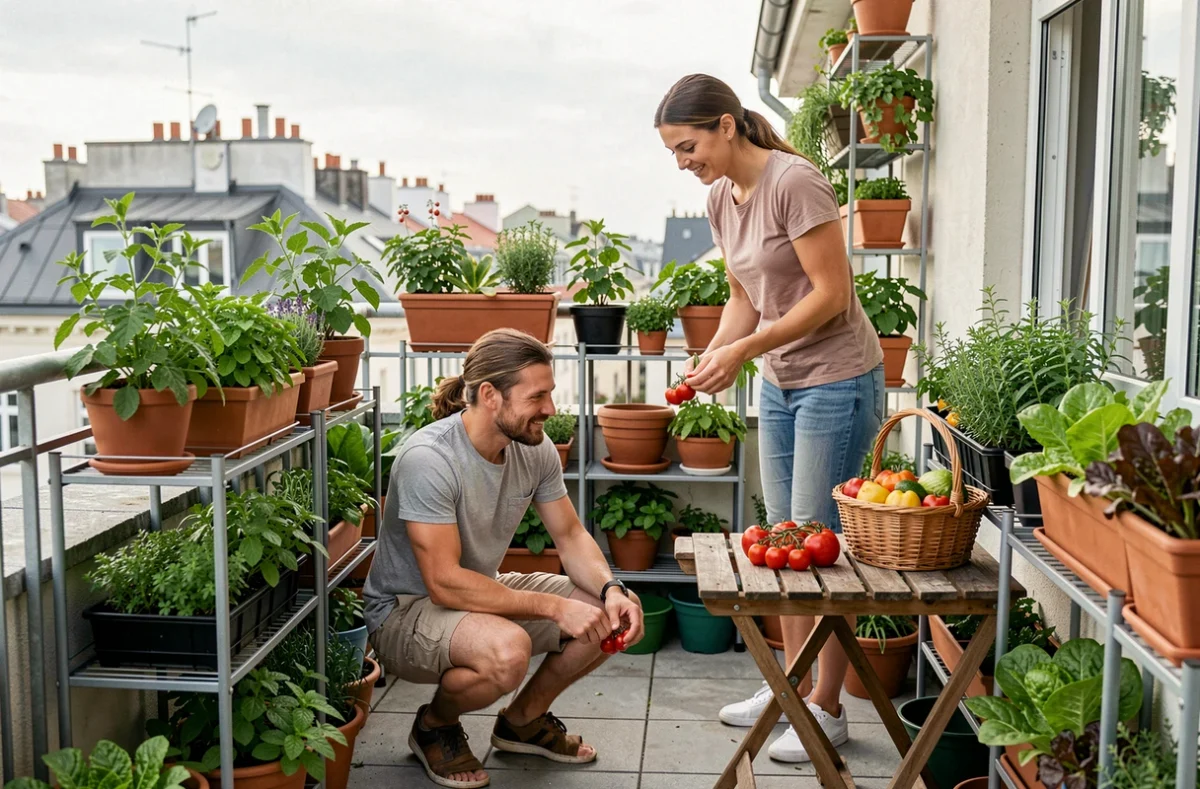
A productive organic balcony vegetable garden relies less on the available area than on the precise management of three parameters: structural load, substrate quality, and water control. Addressing these technical constraints before sowing the first seed avoids most failures that discourage beginner urban gardeners.