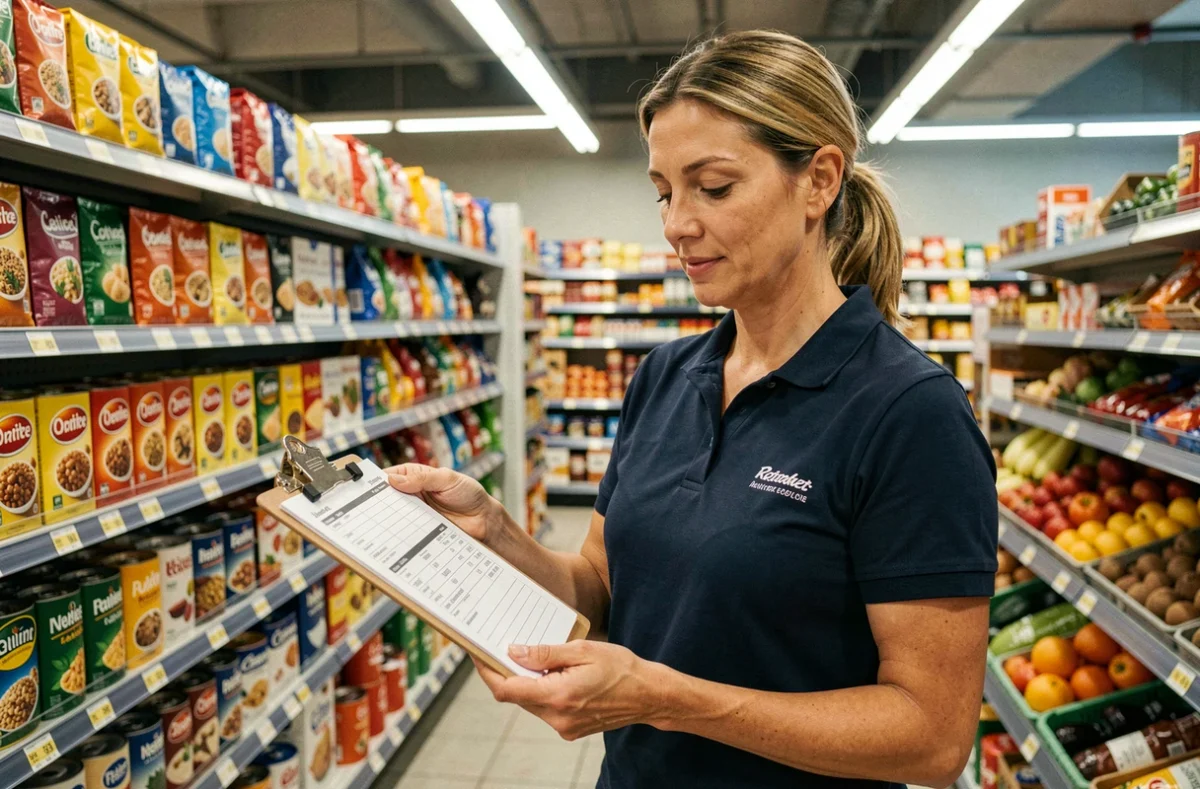
Intermarché operates on a cooperative group model: each store operator is a member and co-owner of the central organization, Les Mousquetaires. This status involves a greater financial and operational commitment than a traditional franchise, but it also gives members a say in the network’s collective decisions. For a project in 2026, the key question is not so much the initial investment as whether the store in question can realistically absorb the costs of upgrades, recruitment and online order fulfillment.
Intermarché store upgrade costs: what financial forecasts don’t always show
Taking over or opening an Intermarché store requires a substantial personal investment, plus expenses that are rarely itemized in official presentations. The most commonly underestimated cost is bringing the building and equipment up to standard, especially when taking over an existing store.
Since 2024, Intermarché has taken over stores from other chains, including Casino and Colruyt. These takeovers create opportunities, but candidates need to assess the premises’ actual condition: aging cold rooms, signage that needs replacing, incompatible checkout systems, or a layout that doesn’t suit the Intermarché retail concept. Every item of work adds to the initial financing plan.
Reading customer reviews of Intermarché can help cross-check firsthand accounts of these hidden costs, as current members sometimes share details that are absent from official documents.
Recruitment is another critical expense. A medium-sized store needs several dozen employees. In some employment areas, it can take several months to recruit butchers, fishmongers or bakers. Including a budget for temporary staff and training in your financial forecast can help avoid unpleasant surprises at opening.

Click-and-collect and e-commerce: a decisive factor in choosing a location
The growth of click-and-collect and delivery is fundamentally changing how locations are assessed. A well-positioned city-center store that is difficult to reach by car may be at a disadvantage compared with a competitor offering a drive-through pickup area with smooth traffic flow.
For a 2026 project, three factors deserve particular attention before signing:
- The store’s logistical capacity to prepare online orders without disrupting the aisles or overloading the existing team
- How easy the site is to reach by car and whether a dedicated pickup area can be created, with traffic kept separate from that of in-store customers
- Local competition in home delivery and rapid pickup, which can capture a significant share of the average basket
A store without an efficient drive-through pickup service loses ground every year to chains investing heavily in this channel. The financial forecast needs to include the cost of this infrastructure (order management software, temporary storage space and dedicated staff).
Joining Intermarché: training and hands-on experience
Joining the network takes more than writing a check. The Groupement Mousquetaires requires a five- to six-month training program, combining classroom instruction with hands-on experience in a store. The program covers financial management, team leadership, human resources and sales strategy.
This time commitment is often underestimated by candidates from other industries. During this period, future members generate no revenue but still have personal expenses to cover. They need to factor these months without income into their personal cash-flow planning.
The program also serves as a screening process: the group assesses candidates’ ability to run a store independently. Successful candidates generally have prior management or leadership experience, even if it’s outside the grocery sector.
Margin scenarios and price sensitivity: stress-test the business plan
In November 2025, the president of Groupement Mousquetaires publicly raised the risk of consumers cutting back if food inflation exceeds certain thresholds. For candidates, this has a direct implication: a single revenue scenario isn’t enough to establish whether a store is viable.
Building at least three scenarios (optimistic, mid-range and downside) helps determine whether the project remains viable if customer traffic falls or price pressures intensify. The key areas to test are:
- Gross margin by department, particularly on fresh products, where price competition is most aggressive
- Labor costs as a share of revenue, including overtime related to drive-through pickup and deliveries
- The ability to maintain competitive prices against hard discounters in the same catchment area
Taking over a store from an outgoing member has the advantage of providing a sales history. Analyzing three to five years of data, while accounting for the effects of the pandemic and recent inflation, provides a more reliable basis than a theoretical market study.
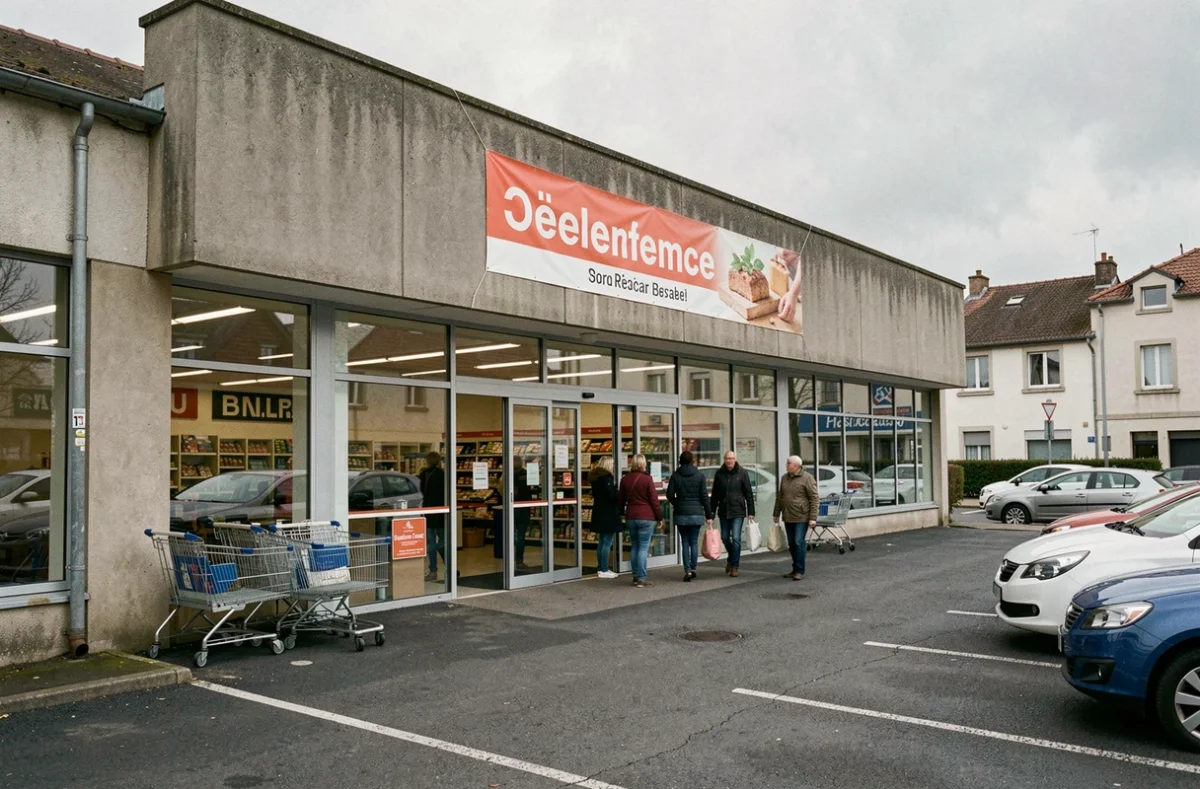
Taking over or opening an Intermarché store: choosing the right option for the area
Taking over an existing store shortens the time before revenue starts coming in, but can involve substantial upgrade costs. Opening a new store means having premises suited to the chain’s current concept, but it takes longer to build up sales.
The decision depends above all on the catchment area and the density of local competition. In a mid-sized town where a Casino store has just closed, a takeover can quickly attract customers left without a nearby option. In an already saturated suburban area, even a new store may struggle to break even without a clear point of difference (an efficient drive-through pickup service, a strong local offering or a deli counter).
The group can help with this analysis, but candidates should also carry out their own checks: traffic counts, conversations with nearby business owners, and reviews of population and median income data. A store that looks viable on paper can fail if the local consumer base shrinks or a competitor makes a major investment at the same time.
The Intermarché model remains strong for those willing to meet the demands of the membership process and the discipline of a cooperative group. Profitability depends less on the brand itself than on the quality of the initial assessment: the condition of the premises, drive-through logistics, realistic margin scenarios and the fit between the candidate’s profile and the operational demands of the business.