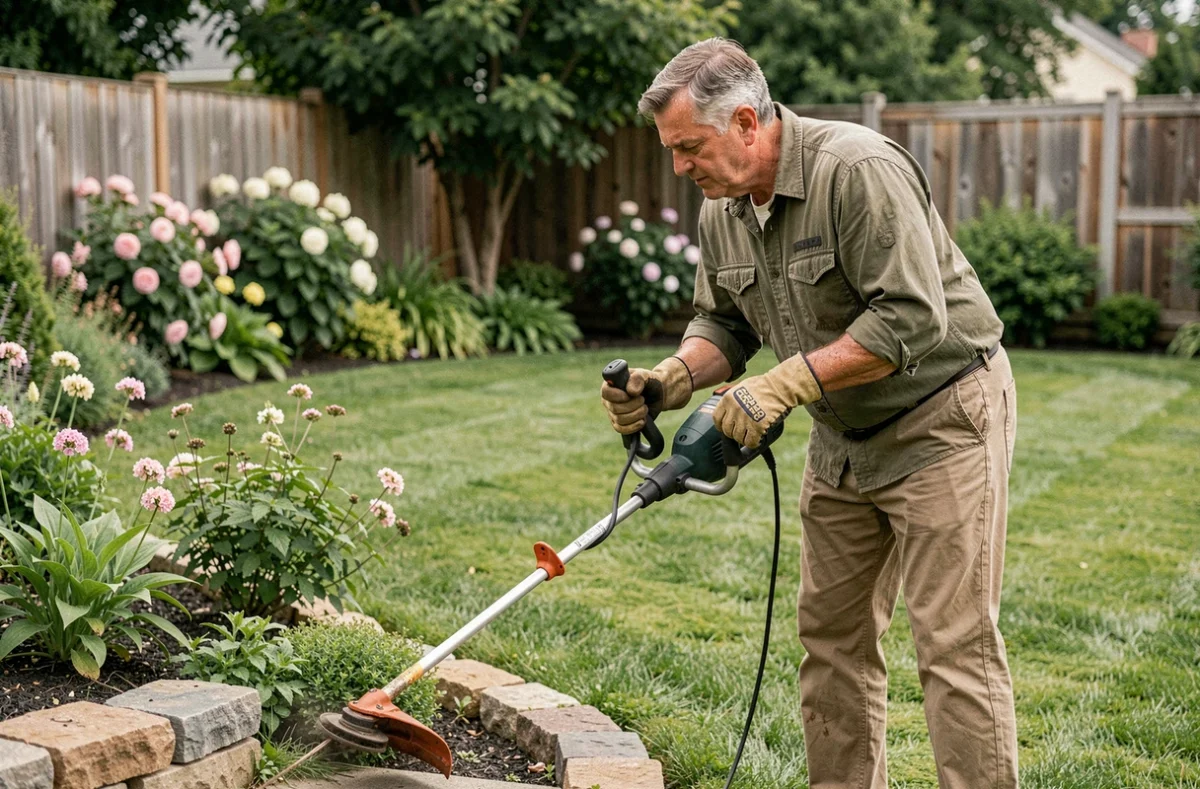
A grass trimmer is a finishing tool that cuts grass with a rotating nylon line in places a lawn mower cannot reach: along walls, around trees and beside flower beds. The line, driven at high speed by an electric, petrol or battery-powered motor, cuts through stems without a blade. This simple mechanism involves several technical factors that determine the quality of the results and the tool’s durability.
Grass trimmer noise levels and local regulations
Before comparing motors, one often-overlooked factor deserves attention: noise. In France, the permitted hours for using garden tools are set by municipal or prefectural orders, rather than by a single nationwide rule. Two neighbouring municipalities may impose different time slots on weekends or public holidays.
Checking your municipality’s regulations before buying can prevent unwelcome surprises, especially with a petrol model. The guaranteed sound power level, expressed in decibels and shown on the tool’s label, makes it possible to compare models objectively. A battery-powered grass trimmer generally scores much lower than a petrol model on this measure.
When it comes to choosing the right grass trimmer, noise matters just as much as cutting power, particularly in densely populated residential areas where noise from garden work often causes disputes between neighbours.
Battery, corded electric or petrol: which type of grass trimmer should you choose?
The power source shapes the rest of your decision. Each technology suits a particular type of use; there is no simple hierarchy of quality.
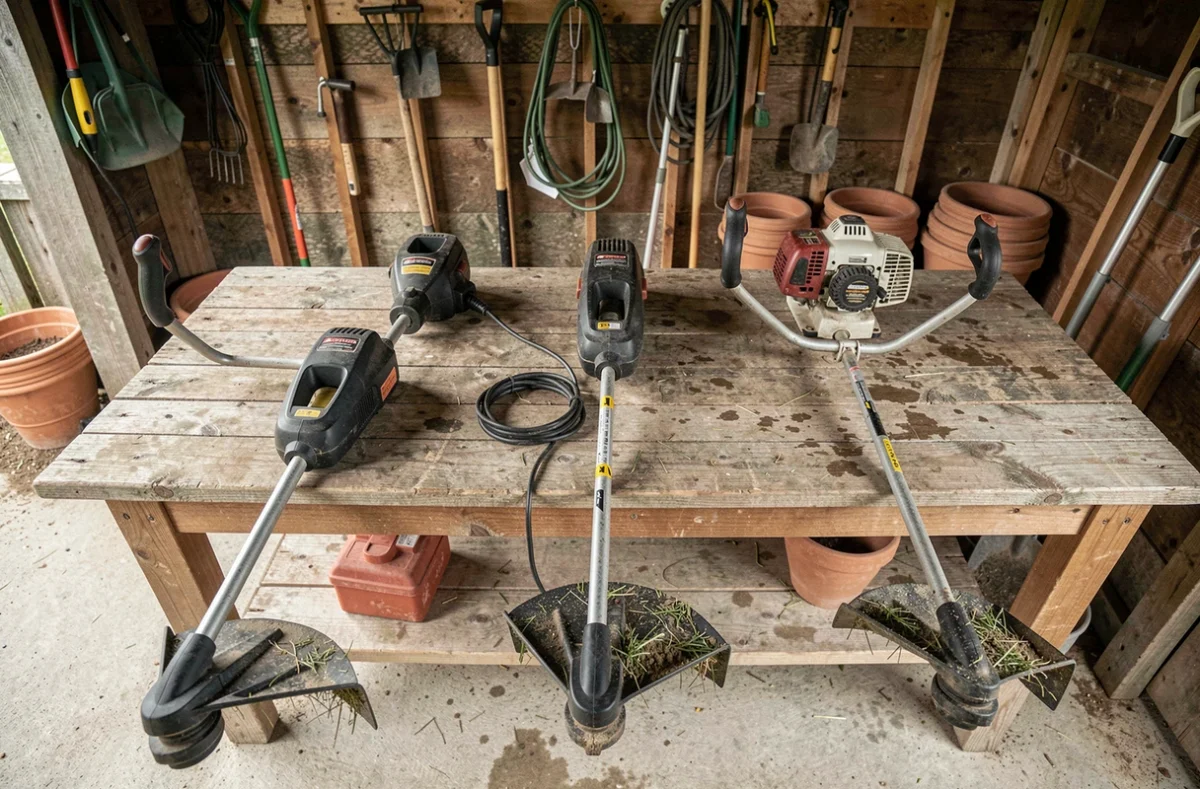
A corded electric grass trimmer is suitable for smaller gardens with an accessible outdoor socket. It delivers consistent power, is lightweight and has the lowest purchase price of the three types. The cord limits mobility, but that is no drawback when trimming edges close to the house.
A battery-powered grass trimmer offers complete freedom of movement. Lithium-ion technology dominates the market thanks to its low weight and lack of self-discharge. One point to plan for: the EU Batteries Regulation (EU) 2023/1542 sets out requirements for the removal and replacement of portable batteries incorporated into products, which will apply from 18 February 2027. Checking that the battery can be replaced and that spare parts are available is becoming a practical buying criterion, not just a marketing claim.
A petrol model, powered by a petrol-oil mixture, delivers the most power. It is designed for large areas or tall, tough grass. Its weight, engine maintenance requirements and noise level make it best suited to intensive use.
- Corded electric: compact gardens, regular use near a power outlet, limited budget.
- Lithium-ion battery: medium-sized gardens, lots of obstacles, occasional to moderate use. Choose a model with a replaceable battery.
- Petrol: large areas, dense vegetation, experienced users prepared for regular engine maintenance.
Line, cutting head and ergonomics: technical details that affect the results
Nylon line is the main wear part. Its diameter directly affects cutting capacity. Thin line is suitable for soft grass along lawn edges. Thicker line can tackle weeds and tall grasses without snapping every thirty seconds.
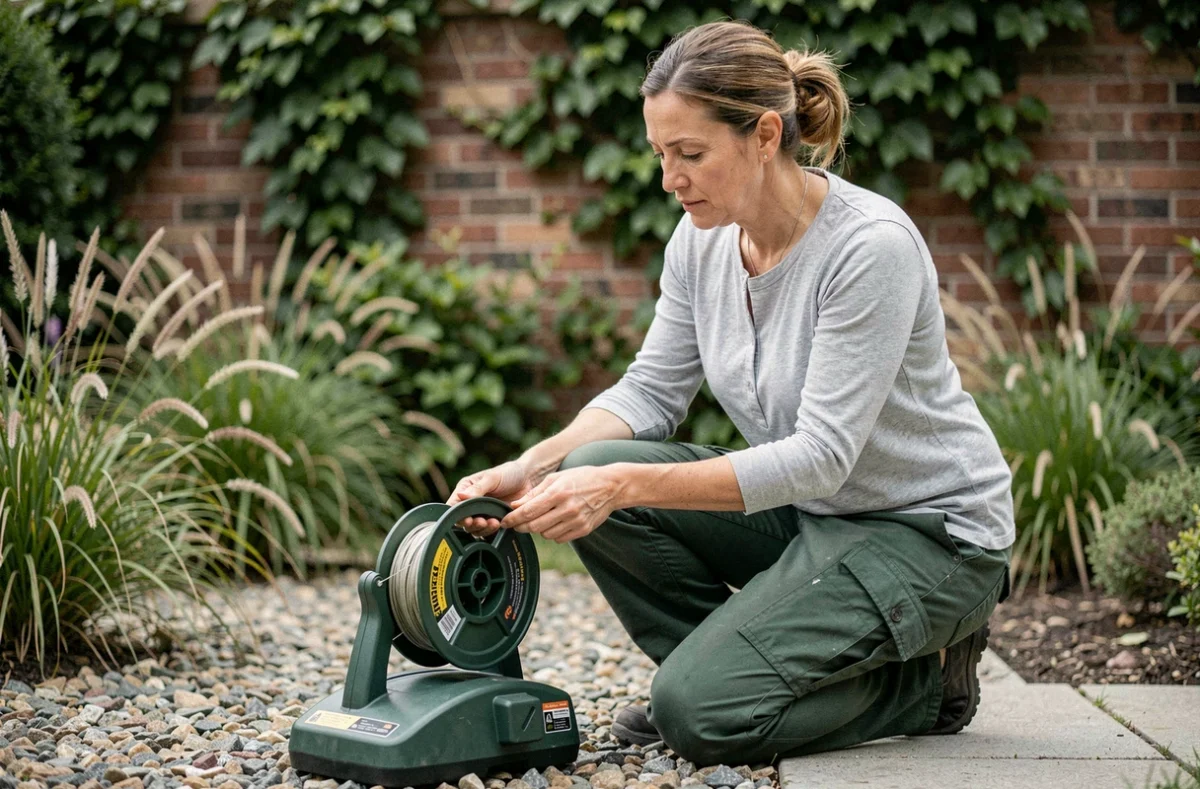
The semi-automatic feed cutting head is the most common mechanism: tapping it on the ground releases more line. It offers a good balance of simplicity and efficiency. Quick-load heads, which take a pre-cut length of line, reduce replacement time but use more line.
Ergonomics comes down to three factors: the tool’s overall weight, how well balanced it feels in your hands, and whether it has a harness or adjustable handle. A poorly balanced grass trimmer can tire your shoulder and wrist in less than fifteen minutes. An adjustable telescopic shaft protects your back and improves cutting precision along edges.
Grass trimmers and garden biodiversity: should you cut everything?
A garden is more than a closely mown lawn. Thanks to its precision, a grass trimmer can be used around the base of hedges, around tree stumps and in grassy areas where local wildlife finds shelter. Hedgehogs, pollinating insects and small reptiles use these microhabitats.
Deliberately leaving some strips of grass unmown around the edges of the garden is an ecological management practice recommended by many local authorities. A grass trimmer is still useful for neatly defining the boundary between maintained and wild areas without cutting everywhere.
In practice, this means mapping out your garden before starting the tool. Patio edges, paths and fence lines benefit from a neat finish. Areas around a native hedge or woodpile are better left grassy, at least in a strip a few dozen centimetres wide.
- Identify areas to maintain regularly (paths, patio, formal flower beds) and areas to let grow (hedge bases, garden edges, damp areas).
- Adjust how often you trim: every two to three weeks is enough for edges, while biodiversity areas can be cut once a year, later in the season.
- Avoid trimming right down to the ground in wildlife refuges, where animals hide in the first few centimetres of vegetation.
Grass trimmer or brush cutter: don’t confuse their uses
Grass trimmers and brush cutters are often confused in search queries. A grass trimmer cuts soft grass with nylon line. A brush cutter, fitted with a metal blade or disc, tackles brambles, scrub and young woody growth.
Buying a brush cutter to maintain lawn edges is like using a sledgehammer to drive in a nail. A grass trimmer is a finishing tool, not a clearing tool. Conversely, forcing a grass trimmer through thick brambles damages the cutting head and causes the line to break constantly.
The layout of the land settles the question. A garden with a lawn, flower beds and a few trees only needs a grass trimmer alongside the lawn mower. An overgrown plot or one bordered by weed-covered banks calls for a brush cutter, or even both tools used in turn.
Ultimately, choosing a grass trimmer depends less on the brand than on three practical decisions: the power source that suits the size and layout of your garden, the line diameter suited to the vegetation you need to cut, and whether the battery can be repaired or replaced on cordless models. Everything else is about comfort, not performance.