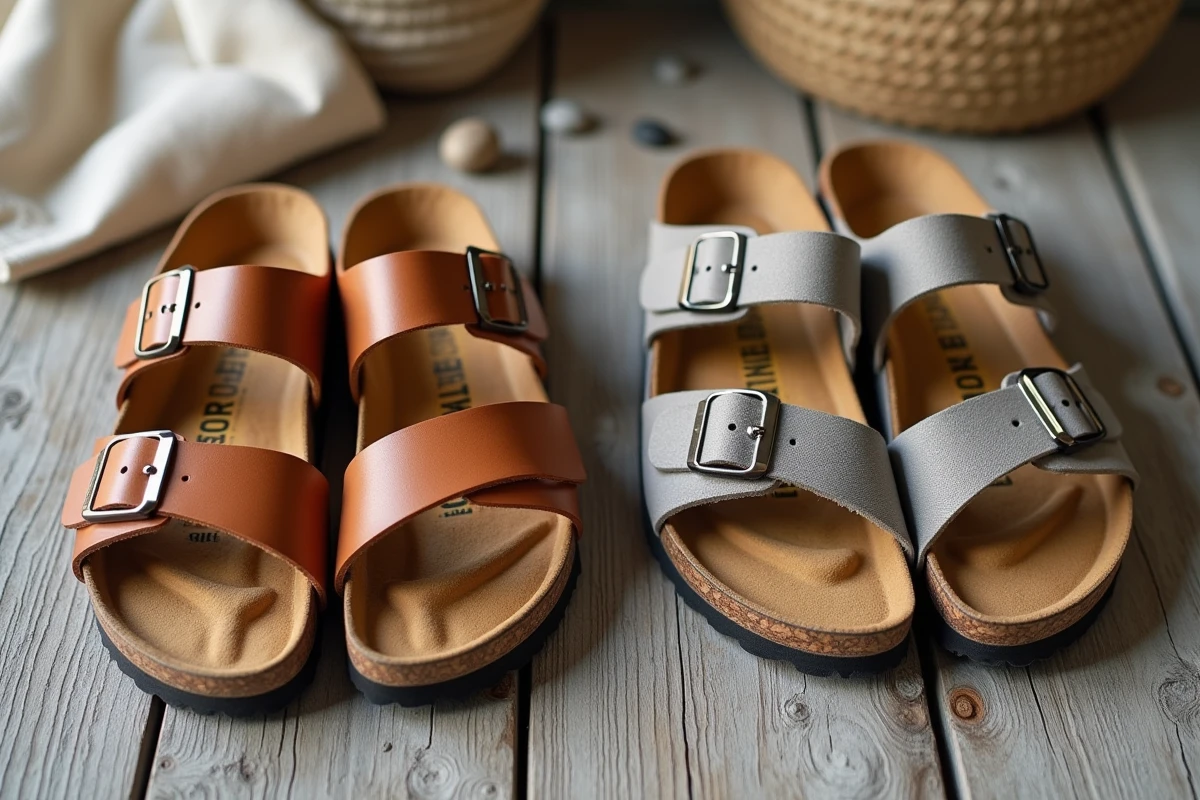
Walking all day at a market or on a visit with sandals that pinch the foot is something we all know. The reflex is often to turn to Birkenstock, the safe bet, or to Bayton, its more accessible alternative. Both brands share a common DNA (anatomical sole, casual look), but they do not meet the same terrain, morphology, and budget constraints.
Rather than listing product sheets, we chose to focus on concrete situations where the choice between these two brands really makes a difference.
Anatomical sole Birkenstock and Bayton: what really happens underfoot
On paper, both Bayton and Birkenstock offer a contoured sole with arch support. The difference lies in the materials and the duration of use.
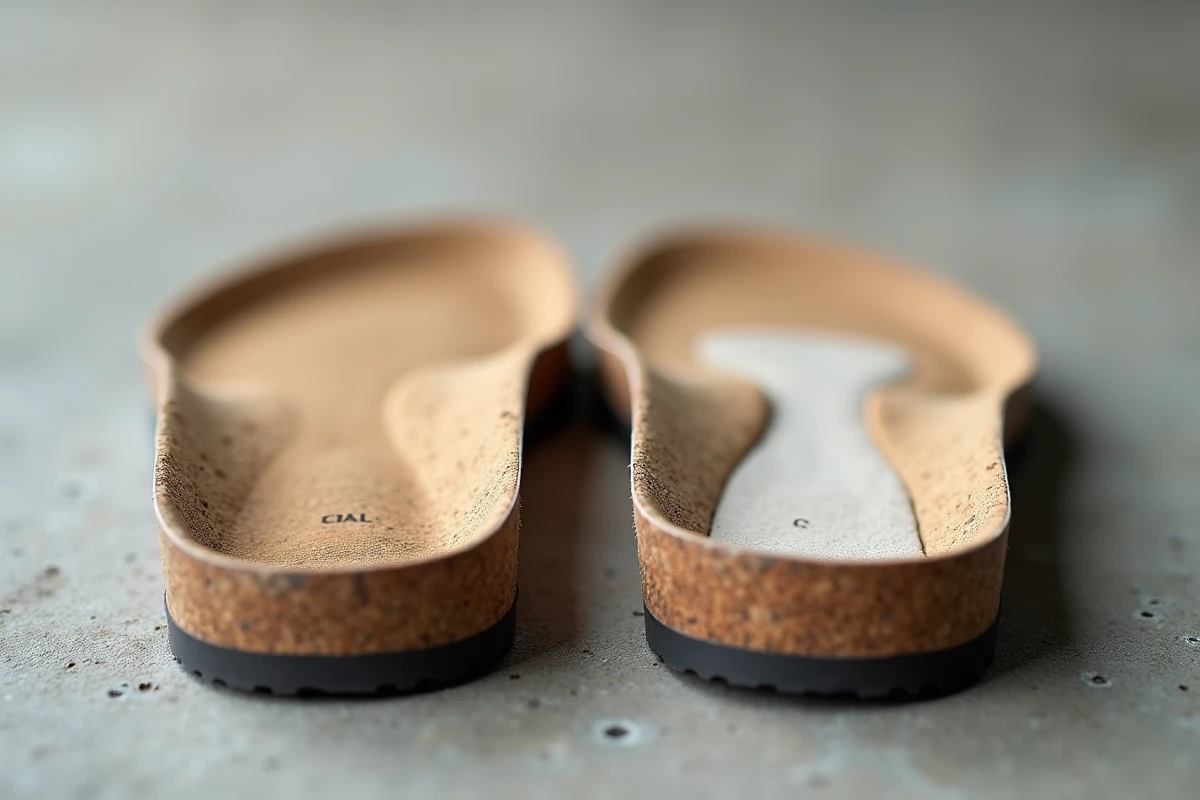
Birkenstock uses a cork-latex blend that gradually molds to the footprint of the foot. After a few days of wearing in, the sole retains the exact shape of the arch, heel, and toes. Birkenstock cork molds to the foot over time, which explains why many users describe increasing comfort over several weeks.
Bayton opts for largely synthetic materials. Comfort is noticeable from the first try-on, without a break-in period. However, the sole loses its original shape more quickly, especially with daily wear on hard surfaces (tiles, asphalt). For occasional use (weekends, vacations), the difference in longevity goes unnoticed. For regular wear over several months, it becomes apparent.
Before deciding based solely on comfort, it’s worth consulting a detailed Bayton or Birkenstock review that compares experiences after several weeks of use.

Foot width and adjustment: the criterion that comparisons overlook
We spend a lot of time comparing looks and prices, but the real purchasing trap lies in the width. A wide foot in a sandal that is too narrow will always lead to friction or lateral pain.
Birkenstock offers two distinct widths on most of its models: Regular (standard width) and Narrow (slim foot). This option is rarely highlighted in general stores, but it radically changes the fit.
Bayton generally offers only one width per model. For a standard foot, it works well. For a wide or slim foot, the adjustment relies solely on tightening the straps, which partially compensates for the problem without addressing it at the core.
Points to check before ordering online
- Measure the width of the foot (not just the length) and compare it to the brand’s size guide, as a 42 Birkenstock Regular and a 42 Bayton do not have the same footprint
- Check if the chosen model is available in Narrow or Regular at Birkenstock, as this information is not always visible on marketplaces
- Try on the sandals at the end of the day, when the foot is slightly swollen, to avoid a pair that is too tight in the morning and pinches in the afternoon
Wearing anatomical sandals every day: the podiatrist’s advice to know
There is a tendency to consider that a sandal with a contoured sole is good for the foot in all circumstances. The French Union for Foot Health (UFSP) published an opinion in 2026 that strongly nuances this idea, specifically targeting Birkenstock.
According to the UFSP, the anatomical sole can worsen certain pains if it becomes the only shoe worn daily. The issue does not stem from the contour itself, but from the lack of lateral support and movement control. For pronounced flat feet or certain pathologies, prolonged wear can generate pain in the heel, knee, or even the back.
This point also applies to Bayton, whose open models share the same structural limitation: no rear counter, no enveloping upper. The UFSP’s recommendation applies to all sandals of this type, not just to one brand.
In practice, alternating with a pair of closed shoes that provide good support remains the best strategy to enjoy the comfort of an anatomical sandal without suffering its long-term effects.
Price and durability Bayton vs Birkenstock: where does the money really go
Bayton is positioned at a significantly lower price than Birkenstock. The gap is not insignificant and often justifies the first purchase at Bayton, especially to test the anatomical sandal format without investing too much.
The question of value for money depends on the intended use:
- For a season of moderate use (vacations, weekends), Bayton offers good value for money and fulfills its role without issue
- For daily wear over several summers, the cork and leather of Birkenstock hold up better over time, provided the sole is maintained (cleaning, waterproofing)
- Birkenstocks can be resoled by a cobbler, significantly extending their lifespan, an option rarely relevant for Bayton models whose repair cost would exceed the purchase price
Materials and traceability
Since 2023-2024, Birkenstock has strengthened its communication on the traceability of its raw materials (cork, latex, leather) and its environmental commitments. Birkenstock’s CSR reports now detail the supply chain, allowing verification of the origin of materials. Bayton remains more discreet on this aspect, without an equivalent publication accessible to consumers.
For a buyer sensitive to environmental transparency, this difference can weigh in the balance beyond the simple price criterion.
The choice between Bayton and Birkenstock rarely boils down to “better” or “worse.” A wide foot will naturally steer towards Birkenstock’s width system. A tight budget for seasonal use will make Bayton perfectly relevant. And in both cases, keeping the UFSP’s advice on prolonged wear in mind avoids turning a comfortable sandal into a source of unsuspected pain.